FPL Farms LLP
Cart
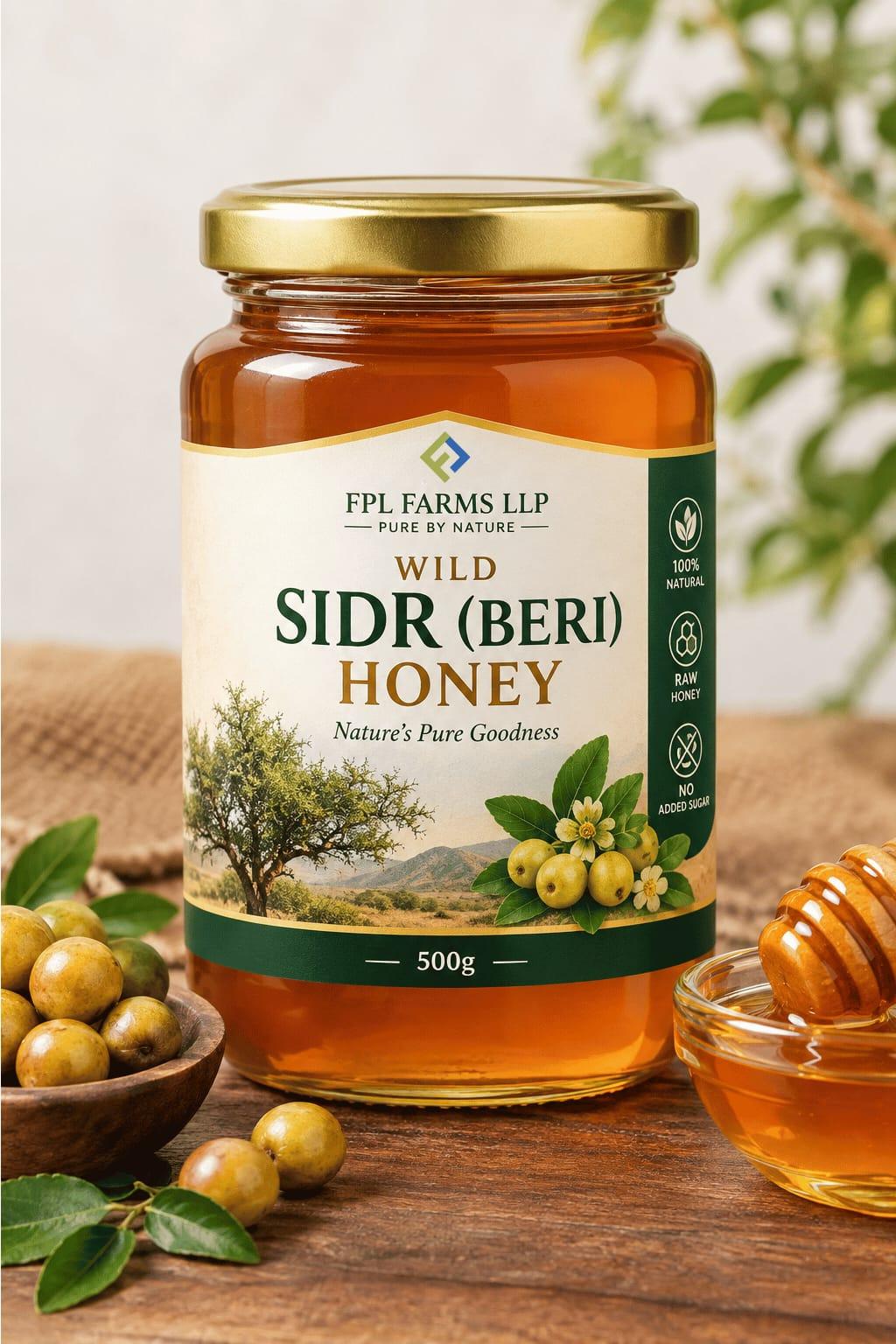
FPL Farms LLPWild Sidr Blossom honey comes from the flower of the Ziziphus tree, known locally as Beri. Unlike crops that are planted in dense, easily managed rows, Sidr trees grow scattered across rugged, semi-arid terrain, which makes large-scale harvesting slow and labour-intensive from the start.
The Sidr tree flowers for a short window each year, and beekeepers often have to move hives into remote areas to catch that bloom. A shorter harvesting season combined with lower yield per hive is the simplest explanation for why Sidr honey costs more than more common varieties like acacia or clover honey.
Flavour is the other half of the story. Sidr honey has a noticeably richer, more complex taste than lighter honeys, with colour that can shift from deep gold to amber depending on the exact bloom and season. That variation is part of what makes it interesting to honey drinkers who buy multiple varieties rather than just one all-purpose jar.
Because genuine Sidr honey is expensive to produce, it is also one of the most commonly diluted varieties in the market. Buying from a source that harvests it directly, rather than a repackager, is the most reliable way to get the real thing.
Cooking oil is convenient, but traditional desi ghee brings a smoke point, flavour, and cooking history that refined oils cannot match. Here is the honest comparison.
4 min readPure, natural raw honey never really goes bad — but stored wrong, it crystallizes fast or picks up moisture. Here's how to keep a jar of wild honey at its best.
4 min readMost honey sold in local markets is cut with sugar syrup. Here are the checks worth doing before you trust a jar.
5 min read